


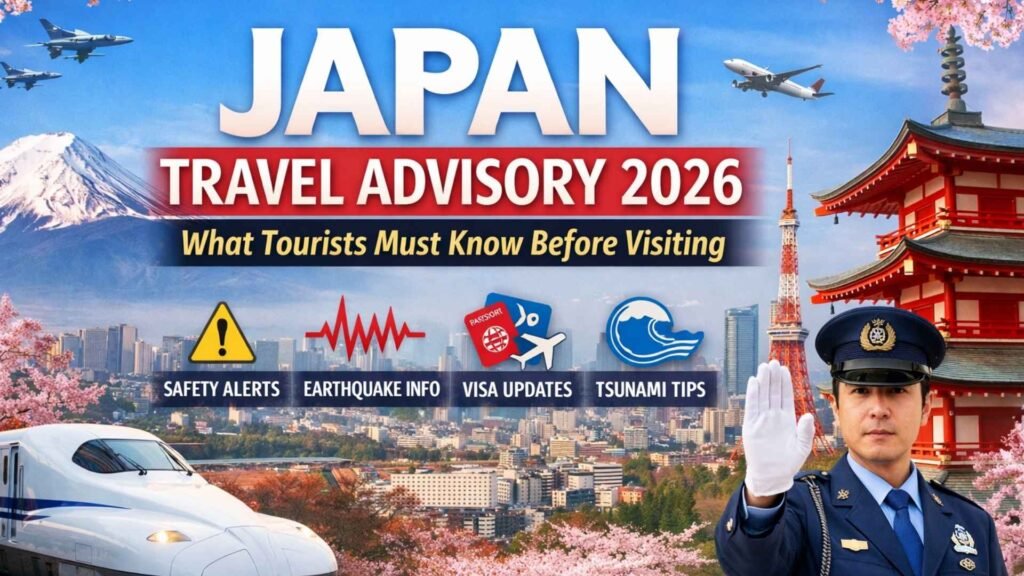
Japan remains one of the world’s most captivating destinations, blending ancient traditions with futuristic technology. However, traveling in 2026 requires more than just a plane ticket and a sense of wonder. Between shifting geopolitical climates, recent seismic activity, and updated entry protocols, staying informed is essential.
This comprehensive Japan Travel Advisory provides everything you need to know for a safe and seamless journey, specifically tailored for international visitors and those traveling from India.
Current Safety Status: Is it safe to travel to Japan now?
The short answer is yes. Japan continues to be one of the safest countries globally, characterized by low crime rates and high public order. However, “safety” in 2026 is defined by two major factors: natural disaster preparedness and regional diplomatic health.
Official Japan Safe Travel Information – updates on safety, disaster alerts, and travel guidance from the Japan National Tourism Organization:
https://www.japan.travel/en/japan-safe-travel-information/
Japan travel advisory earthquake and tsunami updates
Japan is situated on the “Pacific Ring of Fire,” making it one of the most seismically active regions on Earth. As of early January 2026, there has been notable activity:
- Recent Events: On January 6, 2026, a magnitude 6.2 earthquake struck eastern Shimane Prefecture. While the tremors were strong, authorities confirmed there was no tsunami risk from this specific event.
- Is it safe to travel to Japan earthquake zones? Yes, but vigilance is key. Japanese infrastructure is built to withstand significant tremors. Tourists are advised to download the Safety Tips app (developed by the Japan Tourism Agency) which provides real-time earthquake and tsunami warnings in English.
- Tsunami Precautions: Always follow the Japan travel advisory tsunami guidelines: if a major earthquake occurs while you are near the coast, move to higher ground immediately without waiting for an official siren.
Before traveling, tourists should learn basic etiquette and communication rules by reading this Travel Tips and Language Guide for Japan to avoid cultural mistakes.
Is it safe to travel to Tokyo right now?
Tokyo remains perfectly safe for tourists. As a global hub, the city’s emergency response systems are world-class. While Tokyo occasionally feels tremors from distant quakes, the city is operational, vibrant, and fully open for business. Visitors should simply remain aware of their nearest “Evacuation Site,” usually marked with green signs in hotels and public stations.

Japan Travel Advisory Earthquake Safety Information
Japan lies on the Pacific Ring of Fire, which means earthquakes are a natural occurrence. This leads many tourists to search for Japan travel advisory earthquake updates before finalizing their travel plans.
Are Earthquakes Dangerous for Tourists?
Most earthquakes in Japan are mild and go unnoticed by visitors. Buildings are constructed using advanced earthquake-resistant technology, and strict safety codes are followed nationwide.
What Tourists Should Do During an Earthquake
If an earthquake occurs:
- Stay calm and protect your head
- Move away from windows and heavy objects
- Follow hotel or local emergency instructions
- Use emergency alerts on your mobile phone
Public announcements in trains, hotels, and airports are usually provided in multiple languages.
Students planning to study in Japan can explore funding options through the MEXT Scholarship for Indian Students in Japan while preparing their travel journey.
Is It Safe to Travel to Japan Earthquake Concerns Explained
Many travelers worry, is it safe to travel to Japan earthquake risks included. While earthquakes cannot be predicted, Japan is globally recognized for disaster preparedness. Schools, hotels, transport authorities, and even shopping malls conduct regular emergency drills.
For tourists, this means:
- Clear evacuation routes in public places
- Emergency kits available in hotels
- Fast government response systems
- Accurate public information updates
With basic awareness and preparedness, earthquake risks should not stop you from enjoying your trip.
If you are traveling from India, this detailed guide on how to plan a Japan trip from India will help with flights, visas, and budgeting.
Japan Travel Advisory Tsunami Awareness
Another concern linked with earthquakes is tsunami risk. Searching for Japan travel advisory tsunami is common, especially for travelers visiting coastal regions.
Official Japan Visitor Guide – government-approved visitor information including entry requirements and travel planning:
🔗 https://www.japan.go.jp/japan/visit/index.html
How Serious Is Tsunami Risk for Tourists
Tsunamis are rare but possible after strong offshore earthquakes. Japan has one of the world’s most advanced tsunami warning systems.
Safety Measures in Coastal Areas
- Coastal towns have evacuation towers and routes
- Loudspeaker warnings are installed along beaches
- Hotels provide evacuation instructions
- Local authorities conduct drills regularly
Tourists staying near beaches should familiarize themselves with evacuation maps, which are usually posted in hotels and tourist centers.
Is It Safe to Travel to Tokyo Right Now
Tokyo is often the first destination for international tourists, leading many to ask, is it safe to travel to Tokyo right now.
Tokyo Safety Overview
Tokyo consistently ranks among the safest megacities in the world. It offers:
- Extremely low violent crime rates
- Clean and efficient public transport
- Well-lit streets and active police presence
- Multilingual tourist support services
Even late-night travel in most districts is considered safe. However, travelers should still follow basic precautions like safeguarding valuables and avoiding unlicensed taxis.
Tourists looking for step-by-step preparation should follow this complete guide on how to plan a trip to Japan for smooth and stress-free travel.
Japan Travel Advisory From India What Indian Tourists Should Know
For Indian travelers, Japan travel advisory from India mainly focuses on documentation, health guidelines, and general safety.
Key Points for Indian Tourists
- Ensure passport validity for the entire travel duration
- Carry copies of hotel bookings and return tickets
- Purchase comprehensive travel insurance
- Follow local laws strictly, especially regarding public behavior
Japan is very welcoming to Indian tourists, and Indian food options are increasingly available in major cities.
Cultural Awareness Tips
- Respect local customs and etiquette
- Avoid loud behavior in public transport
- Dispose of waste properly even if bins are limited
- Follow queue systems strictly
These small practices help ensure a smooth and respectful travel experience.
Those planning to work in Japan should first check official requirements and expenses mentioned in Japan work visa cost for Indians before making long-term travel decisions.
Japan Travel Advisory China and Regional Travel Conditions
Travelers also often search for Japan travel advisory China due to regional political developments or diplomatic situations. In most cases, tourism between countries continues normally even if political discussions are ongoing.
What Tourists Should Know
- Tourist areas remain unaffected by political matters
- Airports and public places maintain high security
- Travelers should avoid protests or political gatherings
- Embassy registration is recommended for long stays
For regular tourists, regional tensions rarely affect sightseeing plans or daily travel activities.
To avoid extreme weather and seasonal risks, travelers should consider the best time to visit Japan while planning their itinerary.
Health and Medical Safety in Japan 2026
Health safety remains an important part of any Japan Travel Advisory. Japan offers excellent healthcare facilities, but treatment can be expensive for foreign visitors without insurance.
Health Tips for Travelers
- Buy travel medical insurance before departure
- Carry prescription medicines with doctor’s notes
- Stay hydrated during hot summers
- Use masks if visiting crowded indoor areas when required
Pharmacies are widely available, but English-speaking staff may not be present everywhere, especially in rural areas.
Weather and Seasonal Travel Advisory
Japan experiences four distinct seasons, and each has its own travel considerations.
Summer Travel Advisory
- High humidity and heat
- Risk of heatstroke
- Occasional typhoons
Winter Travel Advisory
- Snowstorms in northern regions
- Delays in mountain travel
- Excellent conditions for skiing
Spring and Autumn
These are the best seasons for tourism, with pleasant weather and minimal travel disruptions.
Checking local weather forecasts is strongly advised during your travel dates.
For complete entry rules, airport procedures, and travel formalities, tourists must read this guide on travel to Japan before departure.
Transportation Safety and Public Behavior Rules
Public transport is extremely safe and punctual in Japan. However, tourists should understand certain rules:
- No eating inside trains (except long-distance trains)
- Keep mobile phones on silent mode
- Priority seating for elderly and disabled
- Follow platform safety lines
Breaking public behavior norms may not be dangerous but can lead to discomfort or warnings from authorities.
Digital Safety and Emergency Contacts
Tourists should also consider digital preparedness as part of the Japan travel advisory 2026.
Useful Safety Measures
- Save local emergency numbers
- Download disaster alert apps
- Keep hotel address saved in Japanese
- Enable international roaming or local SIM
Emergency Numbers in Japan:
- Police: 110
- Ambulance and Fire: 119
Most operators may not speak fluent English, so having your location details saved is helpful.
Indian students planning education abroad can also explore opportunities through Japan scholarships for Indian students while preparing their stay.
Important Legal Rules Tourists Must Follow
Japan has strict laws regarding certain activities:
- Zero tolerance for drugs
- Strict alcohol-related conduct laws
- Smoking allowed only in designated areas
- No jaywalking in many city zones
Even small legal violations can result in heavy fines or legal trouble, so tourists should always follow posted rules carefully.
Travel Insurance and Financial Preparedness
No Japan Travel Advisory is complete without discussing insurance and finances.
Financial Tips
- Carry both cash and cards
- Many small shops still accept cash only
- ATMs are available in convenience stores
- Keep emergency funds aside
Travel insurance should cover:
- Medical treatment
- Trip cancellation
- Natural disaster disruptions
- Lost luggage
This provides peace of mind in case of unexpected situations.
Teaching aspirants interested in cultural exchange programs should check eligibility for the JET Programme for Indians 2026 to work and live in Japan legally.
FAQ – Japan Travel Advisory 2026
1. Is it safe to go to Japan right now?
Yes, Japan is considered one of the safest countries for tourists. Crime rates are very low, public transport is reliable, and tourist areas are well monitored. Even at night, most cities remain safe for visitors. Tourists only need to stay alert during natural events like typhoons or minor earthquakes.
2. What is the 5 minute rule in Japan?
The 5 minute rule refers to punctuality and service culture in Japan. Trains, buses, and appointments are expected to be on time, and even a few minutes of delay is taken seriously. Tourists should arrive early for tours, reservations, and transport to avoid missing services.
3. Can females wear shorts in Japan?
Yes, females can wear shorts in Japan, especially during summer. Tourists commonly wear casual clothing in cities and tourist areas. However, very short or revealing clothes may attract attention in conservative neighborhoods or temples, so modest dressing is recommended for cultural sites.
4. Is it safe to travel to Tokyo right now?
Tokyo is extremely safe and well-organized for tourists. Police presence, CCTV, and emergency systems are widely available. Natural disasters are rare in daily life, and the city has strong disaster preparedness systems. Tourists can comfortably explore both day and night.
5. Should I worry about earthquakes while visiting Japan?
Small earthquakes are common but usually harmless. Buildings are designed to withstand strong tremors, and public alerts provide instant guidance. Hotels and public places display safety instructions, making it easy for tourists to follow emergency procedures if needed.
6. Are there any tsunami risks for tourists in Japan?
Tsunamis are rare and mainly affect coastal regions after major offshore earthquakes. Japan has advanced tsunami warning systems and clear evacuation routes. Tourists near beaches should simply follow local alerts and hotel instructions in case of any warning.
7. Is Japan safe for solo female travelers?
Yes, Japan is one of the safest countries for solo female travelers. Public transport, hotels, and streets are secure, and harassment cases are very rare. Female-only train compartments are also available during peak hours in many cities.
8. Do tourists need to follow strict public behavior rules in Japan?
Yes, public behavior is taken seriously in Japan. Speaking loudly, eating in local trains, or littering is discouraged. Following basic etiquette helps tourists avoid uncomfortable situations and shows respect for local culture.
9. Is travel insurance necessary for Japan travel?
Yes, travel insurance is highly recommended because medical treatment in Japan can be expensive for foreigners. Insurance also covers trip delays, lost baggage, and natural disaster disruptions. It provides financial protection and peace of mind during your trip.
10. Are emergency services easily available for tourists in Japan?
Yes, emergency services are fast and efficient across Japan. Police can be reached at 110 and ambulance or fire services at 119. Tourist help desks and multilingual support are also available at major stations and airports.
Final Thoughts on Japan Travel Advisory 2026
The Japan Travel Advisory for 2026 shows that Japan remains a highly safe, organized, and welcoming destination for tourists from all over the world. While natural disasters like earthquakes and tsunamis are possible, Japan’s preparedness systems, strict building standards, and efficient emergency response significantly reduce risks to visitors.
For those wondering is it safe to travel to Japan now, or is it safe to travel to Tokyo right now, the answer is yes, provided travelers stay informed, follow local instructions, and take basic safety precautions. Travelers from India, China, and other countries can confidently plan their trips while keeping an eye on local advisories and weather conditions.
By understanding safety protocols, respecting local laws, and preparing in advance, your trip to Japan in 2026 can be not only safe but also unforgettable. Japan offers rich culture, stunning landscapes, modern cities, and warm hospitality, making it one of the best travel destinations in the world when visited with awareness and responsibility.
Need Help With a Japan Visa From India? Get Expert Assistance
Planning your trip under the latest Japan Travel Advisory also means getting your visa process right. If you want stress-free and professional support for your Japan visa application, expert guidance can save you time and reduce rejection risks.
Get Complete Japan Visa Assistance From Experts
Whether you are applying for a tourist visa, student visa, or work visa, trusted professionals can guide you through documentation, form filling, appointment booking, and follow-ups.
Apply for Japan Visa Assistance Here:
https://www.teamlanguages.com/japan-visa-assistance/application
Visit Us
TLS – The Japanese Language School
2/81–82, 2nd Floor, Lalita Park, Gali No. 2,
Laxmi Nagar, New Delhi – 110092
Call Us
+91 8700956038
Email Us
With expert visa support and proper guidance, you can focus on planning your journey while professionals handle your paperwork—making your Japan trip in 2026 smoother and more secure